
F15: The Building of a Modern Fighter Jet
7월 5, 2022
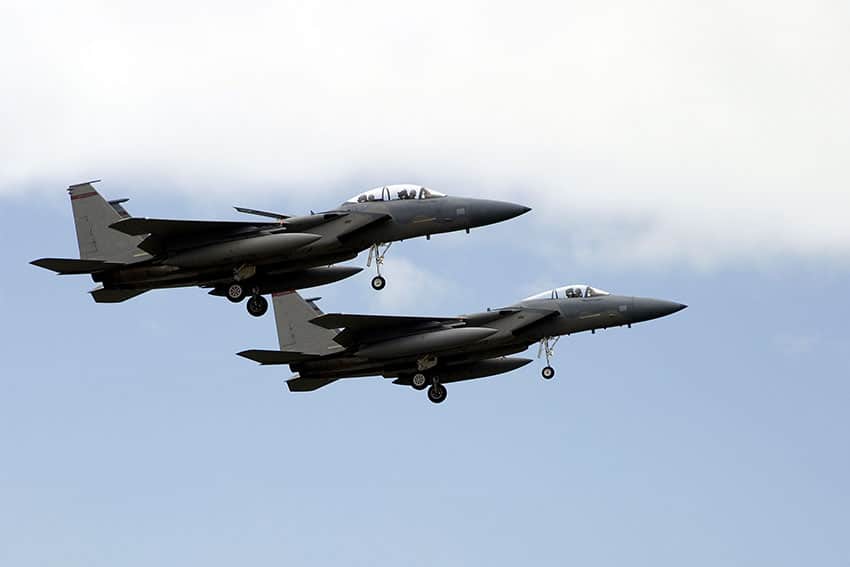
In use for several decades, the F-15 is one of the primary fighter jets used by the U.S. Air Force. The F-15 Eagle has earned its elite reputation from its unmatched maneuverability and acceleration speeds. While many F-15s are still in use today, the Eagle originated in the 1960s. Various F-15 models have seen upgrades over the years, but the fighter jet has remained at the cutting edge of aviation technology.
History of the F15 Jet
The F-15 was initially commissioned by the U.S. Air Force in 1969. The original F-15 Eagle fighter jet was designed and manufactured by McDonnell Douglas, which Boeing has since absorbed. After winning the contract in 1969, McDonnell Douglas unveiled the first F-15 jet, the F-15A, in 1972. The F-15 was designed to be a small, ultra-maneuverable fighter jet. The initial design was for a single-pilot fighter jet that could fly multiple missions and offer consistent air superiority.
In the years since, numerous updated F-15 models have been introduced to fill the more extensive needs of the Air Force. The F-15B was the second model introduced and used for training. The only significant change was introducing a second pilot station for the experienced pilot trainer.
Subsequent models have added advanced technology and equipment for greater mission performance and versatility. Every update to the F-15 fighter jet over the years has been geared toward an even greater flying experience. Many of these upgrades rely on advancements to its onboard computing system, which aids pilots in flight. The F-15 is still used today by the U.S. Air Force, NASA, and several other nations worldwide.
Building the F15 Fighter Jet
When the U.S. Air Force commissioned the F15 fighter jet, the goal was to build a high-speed, lightweight military aircraft. To achieve this, McDonnell Douglas used a combination of aluminum and titanium primarily in the F-15’s design. The titanium wing support structures reduce the plane’s weight significantly compared to steel while improving aerodynamics.
The original design of the F15 Eagle was excellent at maintaining air superiority, as intended. However, the lightweight, single-pilot F15 jet was not viable for air-to-ground missions or missions relying on heavier payloads. The F15-D was introduced to meet demands for such missions. This version, introduced in 1979, featured two pilot stations, sacrificing some maneuverability for heavier payload.
Updating the F15 Fighter Jet
The F-15’s design is a major factor in its flight superiority. However, the fighter jet’s onboard computer technology enables the plane to reach its full potential. An F-15 pilot’s job relies heavily on feeding information to the plane’s computer. Using that information and its sensors, the F-15 makes adjustments in rapid time. This system enables the F-15 fighter jet to adjust in mid-air faster than a pilot. While the plane is an engineering marvel, this intelligence system is just as critical to its success. Understandably, many plane updates over the years have involved upgrades to the F-15’s computing system. It is a testament to the original McDonnell Douglas design that the aircraft is largely unchanged today.
The newest F-15 model, introduced by Boeing in 2021, is the F-15EX Eagle II. This latest model was produced at the same plant in St. Louis initially used by McDonnell Douglas in the 1970s. Its design is mainly similar to the F-15C with minor tweaks. The significant changes include a heavier payload and easier integration of new technology.
Regardless of your fleet’s version of the F-15 Eagle, maintenance is critical to maintaining the fighter jet’s air superiority. AllClear strives to provide our customers with unmatched precision and knowledge regarding aircraft maintenance. If you need aerospace aftermarket services for your F-15 Eagle fleet, contact AllClear today.